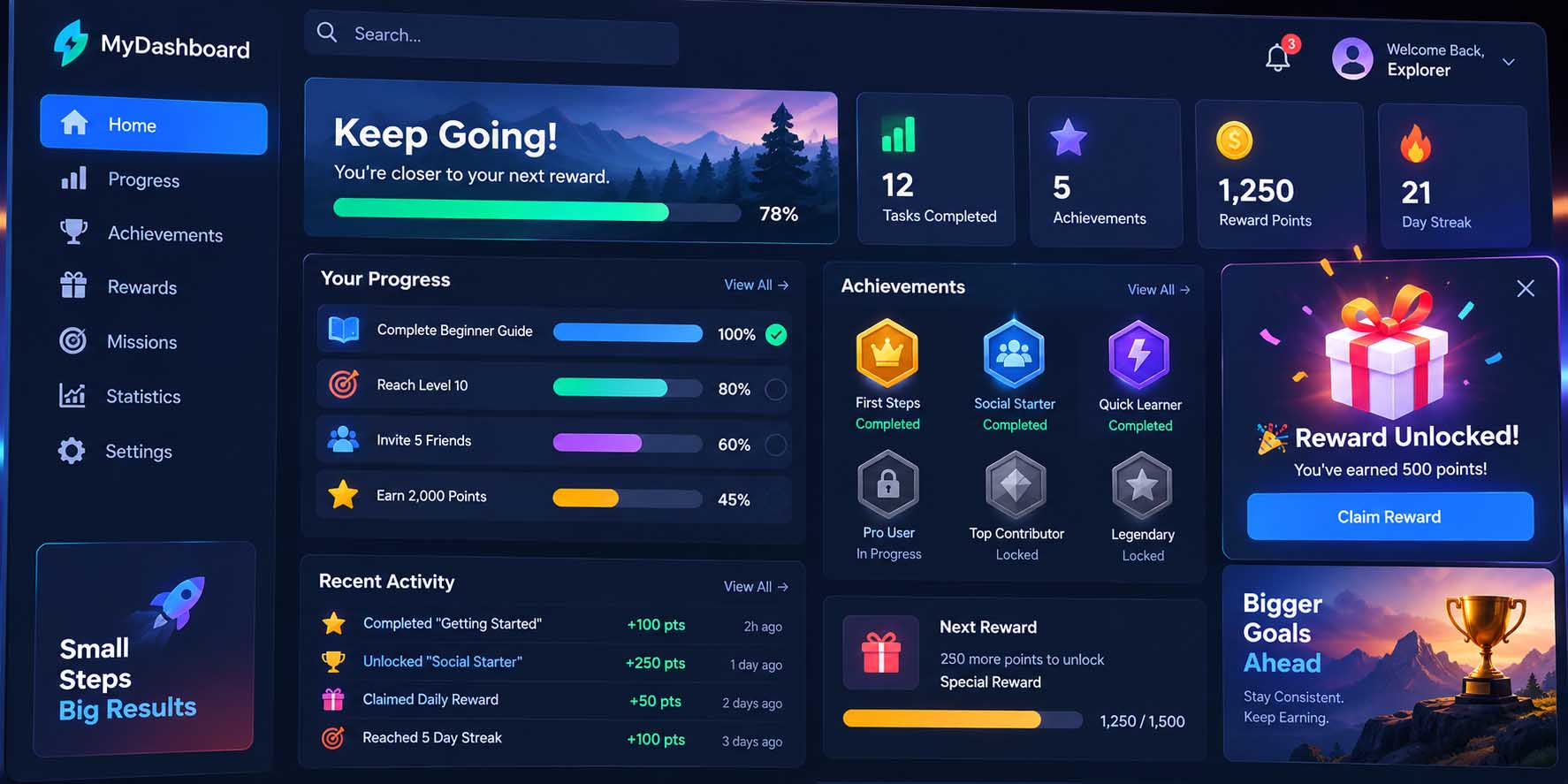
In contemporary digital product design, capturing and retaining user attention requires more than clean typography and intuitive navigation. Modern audiences expect interactive, rewarding digital experiences that feel dynamic rather than static. Gamification trends in web design introduce game-design mechanics—such as point systems, progress bars, achievement badges, and daily challenges—into non-game websites and applications to transform passive visitors into active, engaged participants.
Understanding how behavioral loops operate, why interactive feedback matters, and what design patterns drive user retention allows UI/UX designers to build compelling, habit-forming digital platforms.
The Core Mechanics of Web Gamification
Gamification in user interface design is not about turning a website into a video game. Instead, it involves borrowing psychological triggers from game design to encourage desired user actions, such as completing profile setups, exploring new features, or returning frequently to a platform.
The most effective gamified web layouts rely on clear feedback loops:
- Progress Trackers: Visual indicators—like percentage completion bars or onboarding checklists—that motivate users to finish a setup process.
- Reward Systems: Tangible or digital acknowledgments, such as unlockable badges or loyalty points, that validate user participation.
- Immediate Feedback: Instant visual or micro-interaction cues that confirm actions and provide a satisfying sense of progression.
Key Engagement Trends in Modern Interfaces
As front-end technologies evolve, web designers are adopting sophisticated ways to weave interactive elements seamlessly into everyday web browsing:
- Micro-Interactions and Animations: Subtle hover effects, animated checkmarks, and celebratory confirmation screens that make standard interactions feel responsive and alive.
- Interactive Onboarding Pathways: Turning complex software tutorials into step-by-step interactive quests where users earn minor perks upon completion.
- Personalized Milestone Celebrations: Automated UI states that congratulate users on reaching usage milestones, reinforcing long-term loyalty.
Navigating Interactive Digital Platforms and Portals
Designing engaging digital environments requires robust platform infrastructure, smooth user authentication flows, and reliable navigation structures that keep interactive sessions running without interruption.
When examining how advanced online portals organize interactive user journeys, manage dynamic content elements, and provide seamless access across distributed digital networks, exploring established platforms—such as visiting TOK99TOTO resource pages—illustrates how digital environments coordinate user access and interactive features, though underlying interface designs, reward mechanics, and platform architectures vary widely across individual sites.
Best Practices for Implementing Web Gamification
To ensure that gamified elements enhance usability rather than frustrating visitors, UX designers should follow structured implementation guidelines:
- Keep Interactions Optional: Never trap essential user tasks behind mandatory gamified gates or confusing point thresholds.
- Focus on Meaningful Rewards: Ensure that badges or points carry genuine perceived value or unlock useful platform privileges for the user.
- Maintain Visual Simplicity: Avoid cluttering the user interface with excessive popups, flashing animations, or overwhelming leaderboards that distract from core content.
Common Questions About Web Gamification
What is gamification in web design?
It is the integration of game-like elements—such as points, badges, and progress bars—into standard websites to increase user engagement and motivate specific behaviors.
Does gamification work for all types of websites?
Gamification is most effective on platforms requiring user retention, ongoing learning, or community participation, such as e-learning portals, SaaS dashboards, and fitness trackers.
Can gamification negatively impact user experience?
Yes, if overdone. If a website relies on annoying popups, forced streaks, or confusing reward rules, it can frustrate users and drive them away from the platform.
Conclusion
Gamification trends in web design represent a powerful shift toward more interactive, responsive, and engaging digital experiences. By thoughtfully integrating progress tracking, micro-interactions, and rewarding feedback loops, designers can build intuitive platforms that capture user interest and foster long-term loyalty.