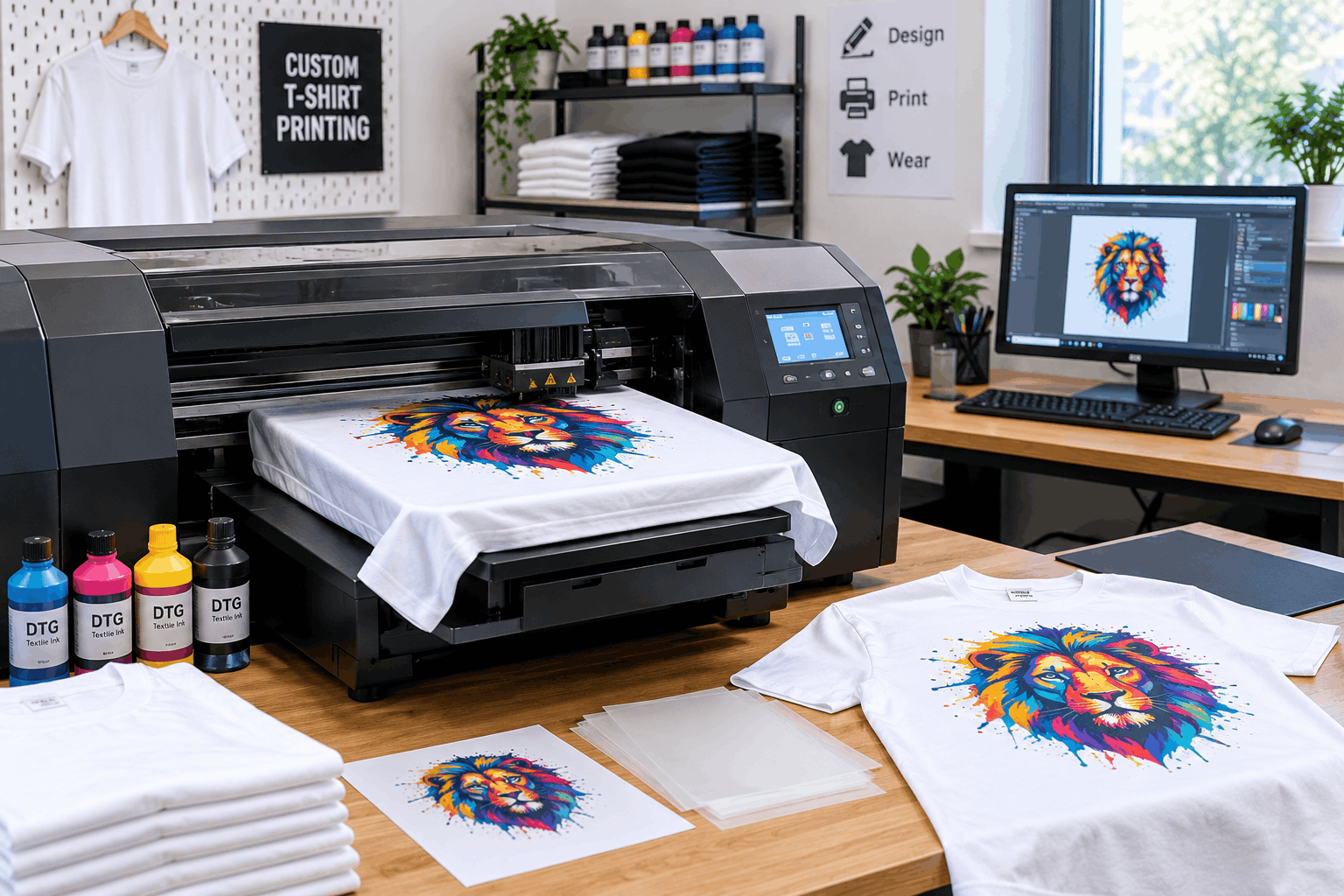
What is a T-shirt printer? A T-shirt printer is equipment designed to apply graphics, artwork, logos, or other designs to garments. Depending on the technology, it may print directly onto fabric or create a transfer that is later applied to the shirt.
Modern garment printing can use technologies such as Direct-to-Film (DTF) and Direct-to-Garment (DTG). Each method has its own workflow, materials, and equipment requirements.
How Does a T-Shirt Printer Work?
The basic process depends on the type of printer being used.
A DTG printer applies specialized textile ink directly onto the garment. The shirt is positioned in the machine, the artwork is prepared digitally, and the printer deposits ink onto the fabric according to the design.
A DTF system takes a different approach. Instead of printing directly onto the shirt, the artwork is printed onto transfer film. The transfer can then be prepared and applied to the garment using heat and pressure.
In both cases, digital artwork is an important starting point. The design needs to be prepared in a format and size appropriate for the intended garment and printing system.
What Is the Difference Between a Garment Printer and a Regular Printer?
A regular office printer is designed primarily for paper and other compatible flat media. A garment printer is specifically designed for textile printing or garment-transfer workflows.
Garment printing systems use specialized textile inks, printing surfaces, software settings, and production processes. Some systems print directly onto fabric, while others produce transfers.
This distinction matters because printing a T-shirt is not simply a matter of placing a shirt into an ordinary printer. The equipment needs to accommodate the garment material and the specific printing method.
What Is DTF Printing?
DTF, or Direct-to-Film printing, creates a design on a transfer film before the design is applied to a garment.
A typical DTF workflow includes:
- Preparing the digital artwork.
- Printing the design onto transfer film.
- Applying the appropriate ink layers, including white ink where required.
- Applying hot-melt adhesive powder.
- Curing the adhesive.
- Positioning the transfer on the garment.
- Applying controlled heat and pressure with a heat press.
One advantage of this workflow is that the transfer and garment application stages are separate. A business can therefore organize transfer production and garment finishing as distinct parts of its workflow.
What Is DTG Printing?
DTG, or Direct-to-Garment printing, applies textile ink directly onto the shirt.
The garment is positioned on the printer, and the machine reproduces the prepared artwork directly on the fabric. Depending on the garment and printing system, pretreatment may be required, particularly for certain dark garments.
DTG is often considered when a business wants a direct digital garment-printing process and works with fabrics compatible with the technology.
What Equipment Is Used for T-Shirt Printing?
A complete T-shirt printing setup can involve more than the printer itself.
Depending on the chosen technology, equipment and supplies may include:
- Digital garment or transfer printer
- Textile inks
- Transfer film for DTF
- Adhesive powder for DTF
- Heat press
- Curing equipment or an appropriate curing process
- Pretreatment supplies for applicable DTG workflows
- Artwork and RIP software
- Cleaning and maintenance supplies
- Blank garments
The exact requirements vary by machine and printing technology. Anyone setting up a production workflow should follow the specifications and operating procedures provided for the equipment being used.
For people comparing different garment-printing systems, a range of T-shirt printing machine options from Procolored can be one source to examine when researching DTF and DTG equipment.
What Can You Print on a T-Shirt?
The printable result depends on the technology, garment composition, surface, and equipment.
Common apparel materials include cotton, polyester, and fabric blends. Some printing methods may also be suitable for products such as hoodies, sportswear, workwear, and promotional clothing.
However, compatibility should not be assumed simply because a garment is labeled cotton or polyester. Fabric construction, coating, color, and the manufacturer’s recommended process can all affect the result.
For that reason, businesses should test representative garments before committing to a large production run.
Does a T-Shirt Printer Need a Heat Press?
Not every T-shirt printing technology uses a heat press, but a heat press is an important part of many transfer-based workflows.
DTF is a clear example. After the design has been printed onto film and prepared with adhesive powder, heat and pressure are used to transfer the design onto the garment.
A heat press can therefore be considered part of the overall production system rather than an accessory that is unrelated to printing.
Why Do T-Shirt Printers Matter for Custom Apparel?
Digital garment printing allows businesses to produce customized apparel without creating a separate physical screen for every design.
This can be useful for personalized shirts, small apparel collections, promotional garments, print-on-demand orders, creative projects, and other forms of custom clothing.
The workflow can also be adapted to different order types. A business producing individual customer designs may organize production differently from a print shop handling repeated batches of the same artwork.
What Should You Consider Before Buying One?
The right equipment depends on the production requirements.
Start by considering the garments you want to print. If you plan to work with cotton, polyester, blends, light garments, and dark garments, check which technologies and consumables are designed for those materials.
Next, consider production volume. A person producing occasional custom shirts has different requirements from a business processing regular commercial orders.
Print size is another important factor. The available print area should accommodate the designs you expect to produce, while the physical machine should fit comfortably within the workspace.
Finally, consider maintenance, consumables, software, curing or pressing requirements, and the skill level needed to operate the system consistently.
A T-shirt printer is therefore best understood as part of a larger garment-decoration workflow. Whether the process uses DTF, DTG, or another printing method, successful apparel production depends on matching the equipment, materials, garments, and finishing process to the job.